Good keyword research ends with a decision about what to improve or create—not a spreadsheet full of phrases with no purpose. This guide takes you from customer questions to a checked shortlist and a useful page plan.
The UK shop example is fictional and illustrative only. No client results, search volumes or rankings are invented.
1. Start with the business and audience
Keyword research means finding the searches your audience uses, understanding what they need and deciding which ones your website can answer usefully. Start with products, services and real customer questions—not the biggest number in a keyword tool.
- List the offers you actually deliver and the areas you genuinely serve.
- Collect recurring questions from enquiries and sales conversations, without publishing private customer details.
- Write down the words customers use, including everyday alternatives to industry terminology.
- Decide the next step each answer could support: comparing products, learning a process or making an enquiry.
A phrase can be relevant to your industry but wrong for your business. A shop selling jackets does not automatically need to target every search about outdoor holidays. Keep a separate list of ideas to reject or investigate.
2. Build a small, evidence-led list
Begin with a handful of seed topics. Expand them with related phrases and questions in a keyword tool, then compare them with searches your existing pages already attract in Search Console.
Use competitor pages to find questions you may have missed, not as a checklist to copy. The SEO competitor analysis guide explains how to look for useful gaps. Search suggestions can supply wording ideas, but they are not search-volume measurements.
- Keep the exact phrase, country, source and date alongside each estimate.
- Record whether the idea came from customer questions, an existing page or a tool.
- Remove irrelevant products, locations and audiences.
- Mark missing information as unknown rather than filling it with guesses.
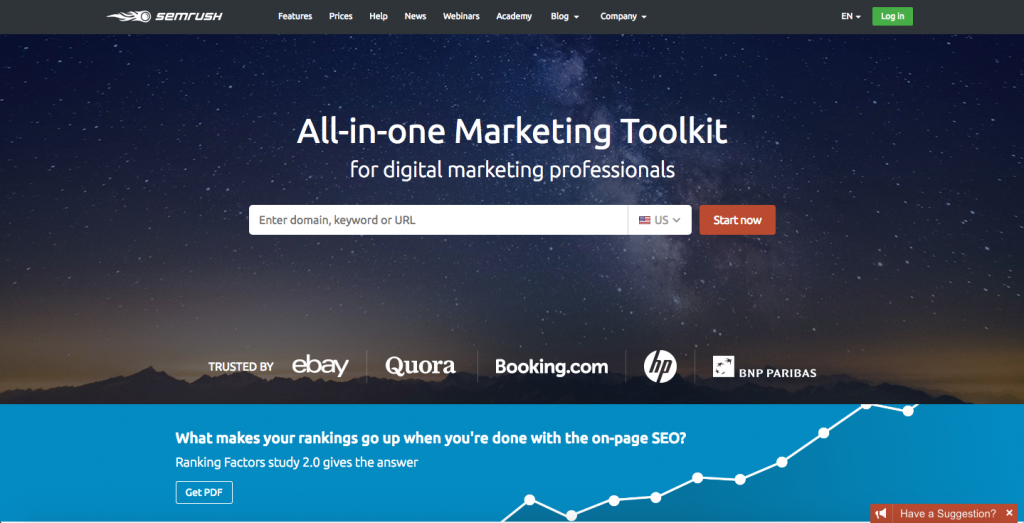
For a tool-specific walkthrough, use the existing Semrush keyword research tutorial. This guide covers the decisions around the research, rather than replacing that tutorial.
3. Check what the searcher needs
Search intent is the task behind a query. Someone looking for “how to clean a waterproof jacket” needs care advice; someone comparing “waterproof walking jackets UK” may need product choices. Do not send both straight to a sales page without checking the evidence.
Inspect current results in the audience’s location for representative phrases. Note the page types, questions answered and how much information the results themselves provide. Record the date and location: results vary, and the mix is not a permanent rule.
- Are results mainly guides, categories, individual products or local businesses?
- Is the search asking for a definition, a comparison or a specific action?
- Are there several plausible tasks within the same result page?
- Can your business provide a credible answer with something useful beyond a rewritten summary?
A tool’s intent label is a starting point, not a substitute for reading the results. You can serve a narrower useful task without copying every heading from the top-ranking page.
4. Read keyword metrics with caution
Search volume is a demand estimate, not the number of visits your page will receive. Keep the country and exact query consistent when comparing terms, and consider seasonal patterns rather than treating an average as next month’s forecast.
- Volume: compare relative demand, but do not add overlapping variants as if every estimate represented different people.
- Organic difficulty: a tool’s estimate of competition, not a guarantee that your site can or cannot rank.
- Paid competition and CPC: advertising signals, not organic ranking difficulty or proof of profitability.
- Missing or zero volume: limited evidence; check customer questions and other sources before dismissing a useful topic.
Google Keyword Planner is designed for advertising research and allows location and other targeting settings. Do not confuse its advertising competition with SEO difficulty. Nor should you expect different tools to report identical estimates.
For established pages, use Search Console’s actual reported impressions and clicks alongside estimates. Those figures describe your site’s observed visibility, not total market demand.
5. Prioritise a useful shortlist
Choose topics by audience fit, business relevance, quality of available evidence, realistic effort and demand—not volume alone. Start with a small shortlist you can review properly.
Fictional UK example — illustrative only
Harbour & Hide is a fictional Glasgow outdoor shop. These phrases and decisions are teaching examples, not checked keyword volumes, observed rankings or Craig’s client results.
- “Waterproof walking jackets UK”: investigate improving an existing category if current results support comparison shopping and the shop has suitable stock.
- “How to wash a waterproof jacket”: investigate a useful care guide, supported by manufacturer instructions and fabric-specific caveats.
- “Outdoor shop Glasgow”: consider genuine location information only if the business really has a customer-facing shop there.
- “Free hiking holidays”: reject for this plan because the shop does not supply that offer.
The next action is to check demand and current results for the retained ideas, not to commission every page immediately. No ranking or revenue outcome is implied.
Keep a research row for each candidate: phrase or group, audience task, evidence, existing destination, proposed action, owner and review date. Mark unresolved intent or missing expertise before assigning work.
6. Map the research to existing pages
Group phrases that need substantially the same answer. Different word orders do not automatically justify separate pages. Start with the existing website and use the keyword mapping guide to choose a sensible destination for each group.
- Improve an existing page when it already serves the task but answers it poorly.
- Consider a new page when there is a distinct useful answer missing.
- Investigate overlap before producing another article on the same subject.
- Keep established addresses unless there is a separately reviewed reason to change them.
Give the writer a brief with the audience, task, essential questions, supporting evidence and next step. Use related wording naturally; do not prescribe a keyword density or repetition quota. The SEO copywriting guide covers turning that brief into a clear page.
Plan relevant links into the destination using the internal linking guide. A page with a good keyword plan still needs useful discovery paths and an accurate answer.
7. Review what happened
Record when the page was published or improved. Review relevant page and query data in Search Console, alongside genuine enquiries or sales where measurement is available. Separate brand searches from other searches when that distinction matters to the decision.
Compare like-for-like periods and note seasonality, other site changes and shifts in results. Do not judge a topic only by a single keyword’s position or assume that every traffic change came from your research. The monthly SEO report guide helps turn the evidence into the next action.
Revise the shortlist when offers, customer questions or search intent change. A before-and-after improvement does not establish causation; use the SEO testing guide for a more cautious evaluation.
Checklist and next step
- Does the business genuinely serve this audience and task?
- Have you recorded the exact query, country and source?
- Have you inspected representative current results?
- Are estimates separated from observed data and assumptions?
- Have you checked existing pages before planning new ones?
- Is the brief supported by evidence rather than a repetition target?
Choose one offer, build a small shortlist and review the existing pages that could answer it. Keyword research reduces guesswork; it cannot guarantee crawling, rankings, traffic or enquiries.
For a walkthrough of one popular tool, see my guide to the Semrush Keyword Magic Tool.
Sources and review notes
The research workflow and fictional shop decisions are editorial recommendations, not measured results or a claim that Craig personally tested the example. Previously checked Google guidance is reused below with its original check date.
- Semrush: keyword research workflow — checked 16 November 2026.
- Google Ads: refine keywords in Keyword Planner — targeting and advertising metrics, checked 16 November 2026.
- Google: helpful, reliable, people-first content — source reused from the keyword mapping guide, checked 12 November 2026.