I like unlinked brand mentions because the conversation starts with something real: somebody has already chosen to mention your business. You are not asking a stranger to find a reason to care. You are asking whether a link would make an existing reference more useful. That does not make every mention a link opportunity. Some are scraped copies, some are complaints, and some belong on websites you would rather leave alone. In this tutorial I will show you how I find worthwhile mentions, check the context, choose the right destination and make a sensible request without turning a straightforward task into a spam campaign.
Quick answer: how mention reclamation works
To turn an unlinked brand mention into a link, find a page that names your business, confirm that it does not already link to you, and identify the person responsible for that page. Ask them to link the existing reference to the most relevant official page. Explain what readers gain, keep the request short, and record the outcome.
- Start with genuine coverage: reviews, interviews, supplier profiles and editorial references.
- Check the live page: search snippets and monitoring exports are only leads.
- Choose the destination carefully: the homepage is not always the answer.
- Accept editorial decisions: a mention is not a debt the publisher owes you.
This is a way to recover missed attribution, not a reason to manufacture mentions or demand keyword anchors. I would rather secure one useful correction on a relevant page than spend a morning chasing dozens of scraped references. Read my link building guide if you need the wider context before building a dedicated reclamation process.
Step 1: define the mentions worth finding
Build a small reference sheet before opening any search tools. Include your trading name, registered name, common abbreviations, branded products, spokesperson names and previous domains. Add distinctive spelling variations where they genuinely occur. A short, generic brand name needs supporting context such as a product category or location, otherwise you will collect unrelated results.
For an illustrative example, imagine a Glasgow business called Northbank Garden Rooms. Useful searches might include its full name, its old trading name and the name of a distinctive product range. Searching only for “Northbank” would bring back a much wider set of organisations. Keep the full-name results separate from the ambiguous ones so you can judge them efficiently.
Also define what you will exclude. Your own websites, syndicated press-release copies, automatically generated directories and internal staff profiles may not deserve outreach. An exclusion is not a claim that every directory is worthless. It is a practical decision about where your time can help readers and improve attribution.
Get internal agreement on approved URLs and public contact details. If a product has been discontinued, decide whether its old page still explains it properly or whether a suitable replacement exists. That small bit of preparation prevents sending requests for links that lead to redirects, unavailable products or content that no longer supports the original mention.
Step 2: search for existing and new mentions
Start with exact-match searches for your brand, then repeat them with sensible variations. A query such as "Northbank Garden Rooms" -site:example.com is an illustrative starting point, not a complete discovery method. Search engines do not show every indexed page and exclusion operators will not necessarily remove every property you control.
Repeat searches around interviews, reviews, partnerships, awards and events. These contexts can reveal references that broad brand searches bury. If your founder regularly gives talks, search their name alongside the company name. If you publish research, search the report title and distinctive phrases from its findings. Attribute the work honestly; a similar sentence is not automatically your material.
Use a monitoring service or search alert to surface new mentions where available. Coverage and alert speed vary, so treat notifications as a discovery feed rather than a definitive record. Backlink indexes can also help separate known links from potential unlinked references, but they should not replace checking the actual page.
Work in two queues: historical mentions and fresh mentions. Historical coverage can contain worthwhile opportunities, but a recently published article is often easier for its author to update. Save the source URL, discovery date, page title and the sentence containing the reference. Those details make later verification much quicker.
Step 3: verify the page and the missing link
Open every candidate before contacting anyone. Find the mention in the article body and inspect whether the brand text, a nearby logo, a citation or another reference already links to you. A link elsewhere on the page might make another unnecessary. Check the destination rather than assuming that a differently worded anchor points somewhere else.
Pay attention to what is actually visible to readers. Some monitoring tools report text from navigation, copied feeds or pages that now redirect. A brand string in an old script or a hidden element is not the same as editorial coverage. If the page has disappeared, investigate whether it moved before marking it as an outreach prospect.
Read the surrounding paragraph and the article as a whole. A factual feature on your product creates a different opportunity from a complaint, a legal dispute or a passing comparison. Where the coverage raises a legitimate issue, deal with that issue rather than treating it as a link-building opening.
Record the existing situation clearly: no link, existing direct link, third-party destination, broken destination or uncertain. If the publisher already links through a redirect or uses a qualified link attribute, do not casually label the mention unlinked. These details change the request and stop several people in your team contacting the same editor with conflicting claims.
Step 4: prioritise editorial value
I prioritise relevance, context and the likelihood that an update will help readers. A mention in a trade publication read by buyers can be more useful than a passing reference on a much larger but unrelated website. Third-party authority scores can support investigation, but I do not let a single score decide which relationships deserve attention.
| Mention type | Potential request | Priority consideration |
|---|---|---|
| Product review | Link to the reviewed product | Is the product still available and accurately described? |
| Founder interview | Link to the business or useful biography | Does it help readers identify the speaker? |
| Research citation | Link to the original research | Can readers inspect the method and findings? |
| Scraped article | Usually no outreach | Is there any real editorial ownership? |
| Negative coverage | Resolve factual or service issues first | Would contact be appropriate at all? |
Add a short reason for each priority decision. “Recent interview, readers need company details” is useful; “high metric” is not enough. Consider whether the article is actively maintained and whether a responsible contact is available. Do not turn this into an elaborate scoring model that takes longer than the outreach itself.
Step 5: match the destination to the reference
The destination should complete the reader’s next step. Link a company identification to the official homepage, a study citation to the original study, and a detailed product discussion to the relevant product page. If an article names a specific resource, sending the reader to a broad sales page is a poor substitute.
Check that the proposed URL loads properly, is publicly accessible and works on mobile. Avoid campaign links that expire, unnecessary tracking parameters and pages that immediately block the content behind an intrusive form. A publisher is more likely to accept a straightforward official reference than a destination that feels like a marketing detour.
When the named product no longer exists, do not quietly substitute an unrelated commercial page. You might maintain a useful archived explanation or suggest a current alternative while making the change explicit. Sometimes the accurate answer is that there is no suitable destination and the mention should stay as it is.
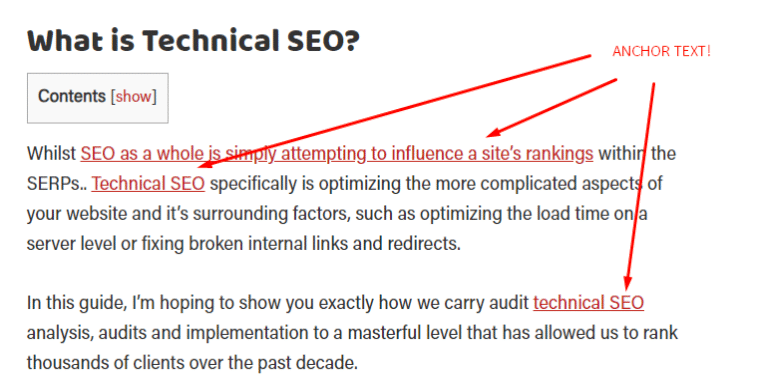
Let the editor choose the final anchor wording. Usually the existing brand or resource title is natural. Asking for an exact-match money keyword when the article only mentions your company changes a helpful attribution request into something much less credible. My anchor text strategy guide explains how I think about relevance without trying to control every word.
Step 6: find the right person and prepare the request
Look first for the article author, section editor or a corrections contact. A general editorial address is often more appropriate than a personal address guessed from a naming pattern. For a supplier listing, the partnerships or website team may be the right route. Follow any published process for corrections and updates.
Keep only the personal data you need for legitimate business outreach, document where it came from and respect opt-outs. Check the rules that apply to the recipient and your organisation, including privacy and electronic marketing requirements. A public email address is not blanket permission for repeated promotional messages.
Before writing, save the exact article URL, the quoted mention and the suggested destination. Decide whether you are requesting a simple attribution link or flagging a factual problem as well. Keep those issues distinct. Do not present an optional link request as an urgent legal correction.
If several employees or agencies work on outreach, maintain a shared contact history and suppression list. Nothing makes a modest request look automated faster than three people asking the same publisher for the same link. Give one person ownership of the conversation and record replies promptly, including clear refusals.
Step 7: send a concise, specific email
The strongest email makes the update easy to understand without dictating editorial policy. Mention the article, identify the existing reference and supply one relevant URL. There is no need to tell a journalist how valuable their domain is to your SEO campaign. Their concern is whether the change improves their page.
Subject: Official reference for your Northbank article
Hello [name],
Thanks for mentioning Northbank Garden Rooms in [article title]. In the section about [specific topic], you refer to [brand or resource].
If useful for readers who want to check the details, the official page is [relevant URL]. Would you consider linking the existing reference to that page?
No problem if your editorial policy is to leave it unlinked. Thanks for taking a look.
[Name and role]
This is an illustrative template, not an email to send unchanged. Replace every placeholder and remove anything that does not fit. If there is an error, describe it accurately and provide evidence. Do not add a compliment you cannot substantiate or claim you are a regular reader when you have only just discovered the site.
Keep attachments out of a straightforward attribution request. If the editor needs supporting information, provide an accessible source or offer to answer questions. Do not promise social promotion or a reciprocal link in return. The existing article should justify the update on its own.
Step 8: follow up once and measure the right outcomes
Give the recipient reasonable time to deal with normal editorial work. If there is no reply, one polite follow-up may be enough. Use the same thread, restate the relevant page and ask whether another contact handles updates. Where a publisher says no, or asks you not to contact them, close the request and record that decision.
When an update appears, check it on the live page. Record the destination, anchor, link attribute where visible, and the date you checked it. Do not assume a positive email guarantees that a link was published, or that a published link will remain there permanently. Thank the editor without immediately asking for another favour.
Measure the funnel from verified opportunities to requests, replies and live updates. Separately track referral visits and meaningful actions where your analytics setup allows it. Search performance can change for many reasons, so do not attribute every ranking movement to a handful of reclaimed mentions.
Review rejected and ignored requests for patterns. You might be targeting old articles, choosing poor destinations or reaching the wrong department. Improve the process before increasing volume. My outreach guide covers the wider workflow, but the central idea here is simple: fewer accurate requests usually beat a large, badly checked list.
Common mistakes that waste opportunities
Treating every mention as an entitlement
Unless a specific legal or contractual obligation applies, the publisher decides whether to link. Do not invent an attribution requirement or threaten action to obtain an SEO benefit. A respectful refusal is a normal outcome.
Confusing copied content with real coverage
A scraper can reproduce your name hundreds of times without creating a useful outreach audience. Check ownership, editorial quality and whether the page serves a genuine purpose before collecting contacts.
Sending every link to the homepage
A general destination can make sense for a business profile, but not for a citation of a detailed study. Match the specific claim and preserve the original article’s context.
Hiding the commercial motive behind a false correction
It is fine to ask for a useful link. It is not fine to imply the article is factually wrong merely because the brand name is unlinked. Be clear about what you want changed and why it helps.
Another mistake is judging success only by followed links. A qualified editorial link can still help readers discover you. Understand the distinction rather than pressuring publishers to change attributes that reflect their policies.
Unlinked mention outreach checklist
- List the brand names, people and resources that genuinely belong to your organisation.
- Search for references and save the original page URL with its surrounding sentence.
- Open the live page and confirm whether a suitable link already exists.
- Check that the article is relevant, legitimate and appropriate for contact.
- Choose a destination that directly supports the existing reference.
- Verify the destination works and does not mislead readers.
- Find the appropriate editorial contact and check previous outreach records.
- Write one specific request using the article title and relevant context.
- Record the send date, any reply and the next action.
- Follow up only where appropriate, then stop if declined or ignored.
- Verify published changes and thank the person who made them.
- Review outcomes and improve targeting before expanding the campaign.
I would run this as a recurring maintenance task rather than a one-off rush. Businesses that publish research, appear at events or attract press coverage can build up new mentions naturally. A manageable review schedule keeps the work close enough to publication for the request to remain relevant.
Frequently asked questions
Is an unlinked mention already valuable?
It can be. People may discover your business, search for you or remember your expertise without clicking a link. That does not mean every mention produces a measurable ranking benefit. Treat recognition and referral access as related but distinct outcomes.
Should I ask for a followed link?
I normally ask for a useful editorial reference, not a particular attribute. Publishers have their own policies. Paid or sponsored relationships need appropriate treatment, and trying to disguise them as ordinary editorial mentions is not a sensible shortcut.
Can I reclaim mentions of an employee?
Sometimes, where the person is clearly representing the business and a company page helps readers. A personal achievement or unrelated interview may not justify a business link. Check the context and the person’s wishes before approaching the publisher.
What if the article links to the wrong website?
Explain the mismatch with evidence and supply the correct official URL. Avoid claiming impersonation unless you have grounds for that claim. A typo, outdated domain or similarly named business may explain the mistake.
How long should I keep checking old mentions?
Continue while you find relevant pages that can realistically be updated. There is no universal age limit. If most results are abandoned or uncontactable, shift effort towards fresh coverage and resources that people have a reason to cite.
If you want help deciding where reclamation fits into your wider strategy, contact me with your website and the kind of coverage you already receive.